PACKAGING GUIDE
What Affects Custom Jewelry Packaging Cost? A Buyer’s Guide
Understand the structures, materials, inserts, finishes, quantities and delivery details that shape a custom packaging quotation.
DOMZO PACKAGING GUIDE · 11 MIN READ
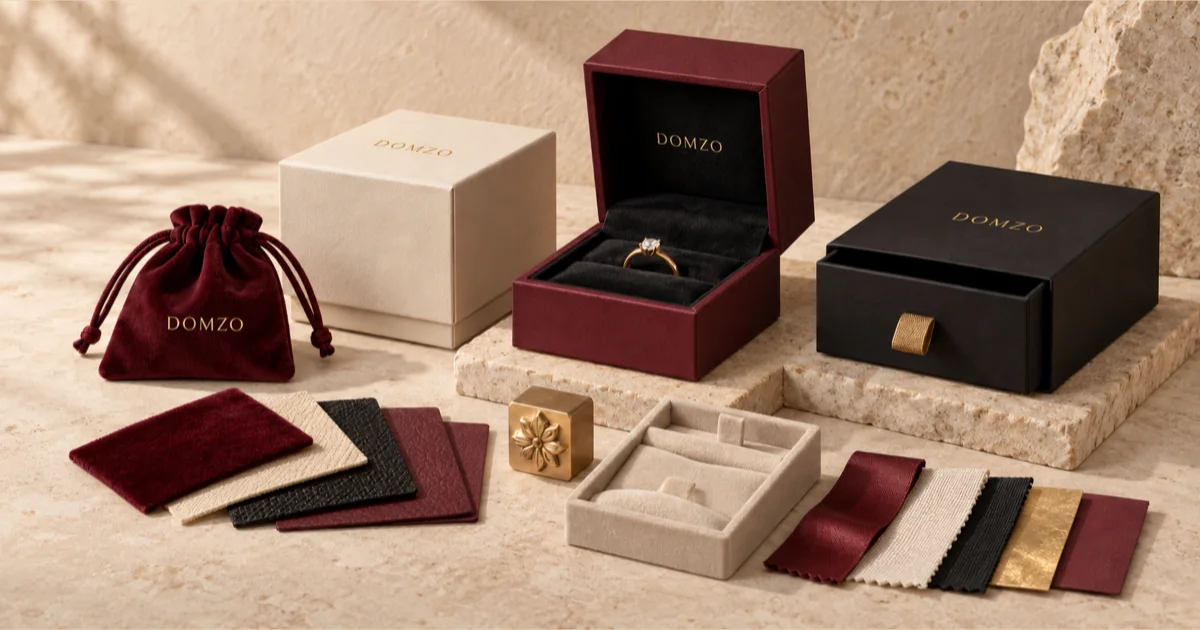
Two jewelry boxes can look similar in a photograph and still receive very different quotations. One may use a standard structure, readily available paper and a simple insert. Another may require a custom opening style, premium covering material, a fitted velvet insert and several finishing processes.
That is why there is no reliable universal price for custom jewelry packaging. The final cost depends on the complete specification: structure, dimensions, material, insert, branding, quantity, packing and delivery requirements.
This guide explains the main cost drivers, how to compare quotations correctly and where jewelry brands can simplify a packaging project without weakening presentation or product protection.
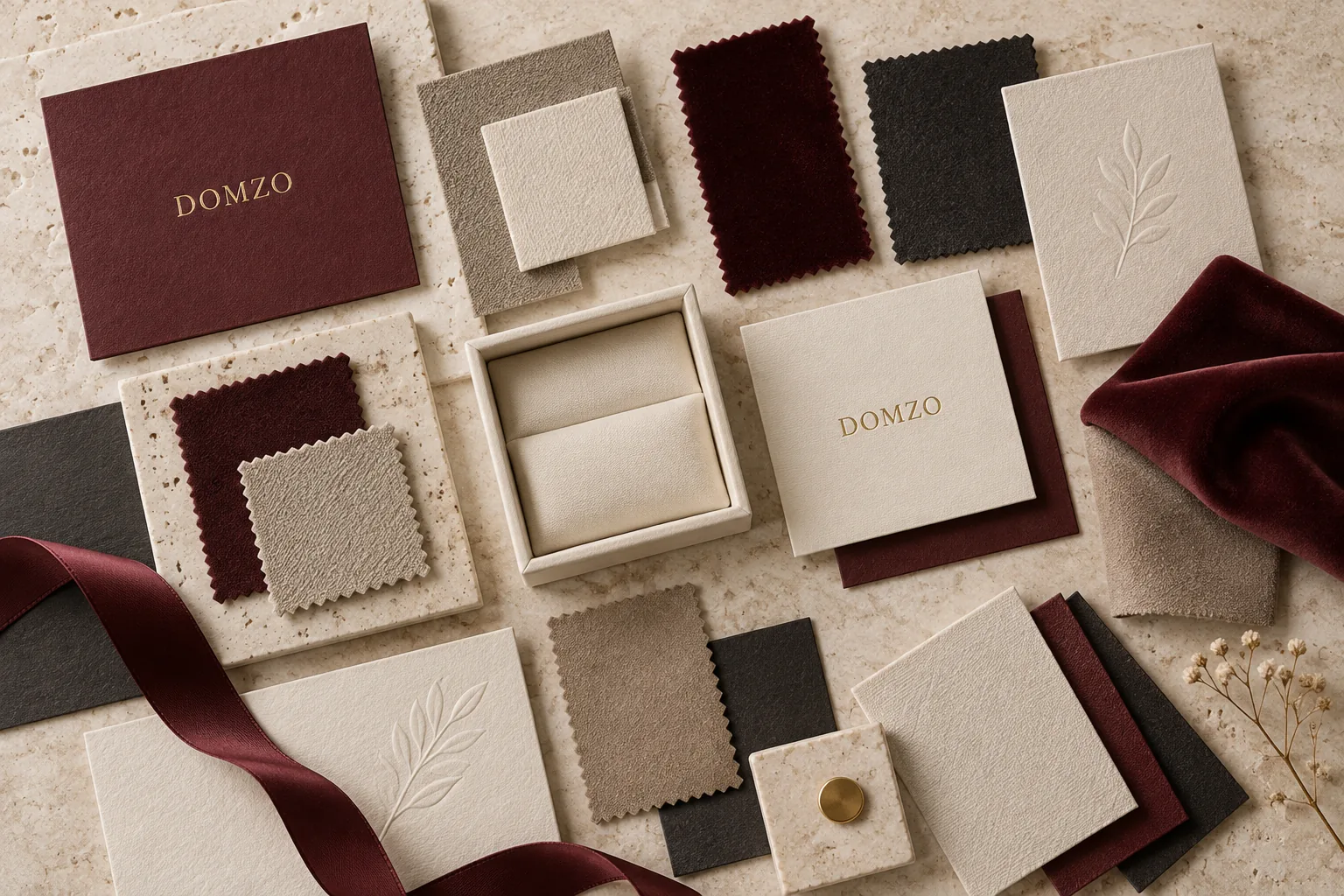
Structure, covering material, insert construction and logo finish all contribute to the final packaging cost.
Why Custom Jewelry Packaging Does Not Have One Fixed Price
Custom packaging is manufactured to a specification rather than selected from a standard retail price list. Even a small change can affect more than one part of production.
For example, increasing the height of a necklace box uses more material, changes the insert dimensions and may reduce the number of boxes that fit into each shipping carton. Adding a second foil position requires another production setup. Dividing one order into several colors may create separate material and color-control requirements.
A useful quotation therefore needs to describe what is included. Comparing only the unit price can be misleading when two suppliers have assumed different materials, inserts, logo processes or delivery terms.
The Main Factors That Affect Custom Jewelry Packaging Cost
1. Packaging structure
Structure determines the materials, components and amount of assembly required. A folding paper box normally uses fewer components than a rigid hinged box, drawer box or magnetic-closure box.
More complex structures can require additional board pieces, magnets, ribbons, hinges, wrapping and manual assembly. The best structure is not automatically the most complicated one. It should suit the jewelry, price positioning, retail environment and customer experience.
2. Finished size and number of sizes
Larger packaging uses more board, paper, fabric and insert material. It also occupies more space during packing and shipping.
The number of sizes matters as well. Ring, earring, pendant, bracelet and necklace boxes may each require different cutting dies and inserts. Even when they share one color and logo, they should be listed as separate specifications in a quotation request.
Before confirming dimensions, check the jewelry size, chain arrangement, product height and any cards or accessories that must fit inside. Oversized packaging increases material and freight cost without necessarily improving presentation.
3. Exterior and interior materials
Material choice affects appearance, durability, production method and cost. Common options include specialty paper, coated paper, textured paper, fabric, velvet, microfiber and leather-like materials.
Availability is important. A standard material in an existing color may be more efficient than an unusual texture or custom-dyed fabric. Interior material also matters because it touches the jewelry and must work with the insert construction.
Ask for physical samples whenever color and texture are important. Screen colors cannot accurately represent every paper, fabric or foil finish.
4. Insert design
The insert protects the jewelry, controls how it is presented and prevents movement during transport. A simple pad is different from a fitted insert with multiple cavities, tabs, elastic, ribbons or removable components.
Insert cost is influenced by:
- Jewelry type and dimensions
- Number and shape of cavities
- Foam, paperboard or molded base material
- Velvet, microfiber, fabric or paper covering
- Tabs, slots and fastening details
- Manual assembly requirements
A well-designed insert can sometimes allow one box size to support several related products. This may reduce the number of packaging sizes, but it should not compromise fit or make the product difficult to remove.
5. Logo application and surface finishes
Hot foil stamping, printing, embossing, debossing, spot finishes and multiple logo positions use different tools and production steps.
A single foil logo in one position is usually simpler than combining several processes. Custom Pantone colors, large foil areas, fine artwork and logos placed on several components may require more testing and setup.
Provide vector artwork whenever possible and confirm the logo size, position and color before sampling. Changing these details after a branded sample has been produced can require another setup or revision.
6. Order quantity and product versions
Production includes fixed setup costs such as cutting dies, printing plates, foil dies, color preparation and machine setup. As quantity increases, these costs are distributed across more finished units, which generally lowers the unit cost.
Quantity must be stated for every style, size, color and logo version. A total requirement of 3,000 boxes divided across three sizes is not necessarily priced in the same way as 3,000 identical boxes.
DOMZO’s standard and possible lower starting quantities are explained in the custom jewelry packaging MOQ guide. Lower quantities may be possible for selected projects, but the unit price will normally be higher.
7. Sampling and revisions
A pre-production sample helps confirm structure, dimensions, materials, logo and insert before bulk production. It can prevent a costly mismatch that is difficult to correct after manufacturing has started.
Sample cost and timing depend on the complexity of the project and whether custom tools or materials are required. DOMZO’s typical sampling time is 7–10 days. Revisions to structure, size, material or branding can require an additional sample and more development time.
To keep sampling efficient, consolidate feedback from design, purchasing and product teams before requesting a revision.
8. Individual packing and quality requirements
Protective sleeves, tissue wrapping, individual bags, labels, dividers, corner protection and special carton requirements add materials and labor. They may be necessary for delicate surfaces or long-distance transport.
Quality requirements should also be defined clearly. Color tolerance, logo position, surface condition, insert fit and packaging method need to be practical and measurable. Vague expectations create uncertainty; agreed reference samples and inspection points create consistency.
9. Shipping method and destination
Shipping cost is affected by packed volume, weight, carton dimensions, destination, delivery time and shipping terms. Rigid assembled boxes usually occupy more volume than folding structures or flat-packed bags.
A low factory unit price does not always produce the lowest delivered cost. Ask whether the quotation includes sampling, tooling, individual packing, export cartons and freight, and confirm the delivery term being used.
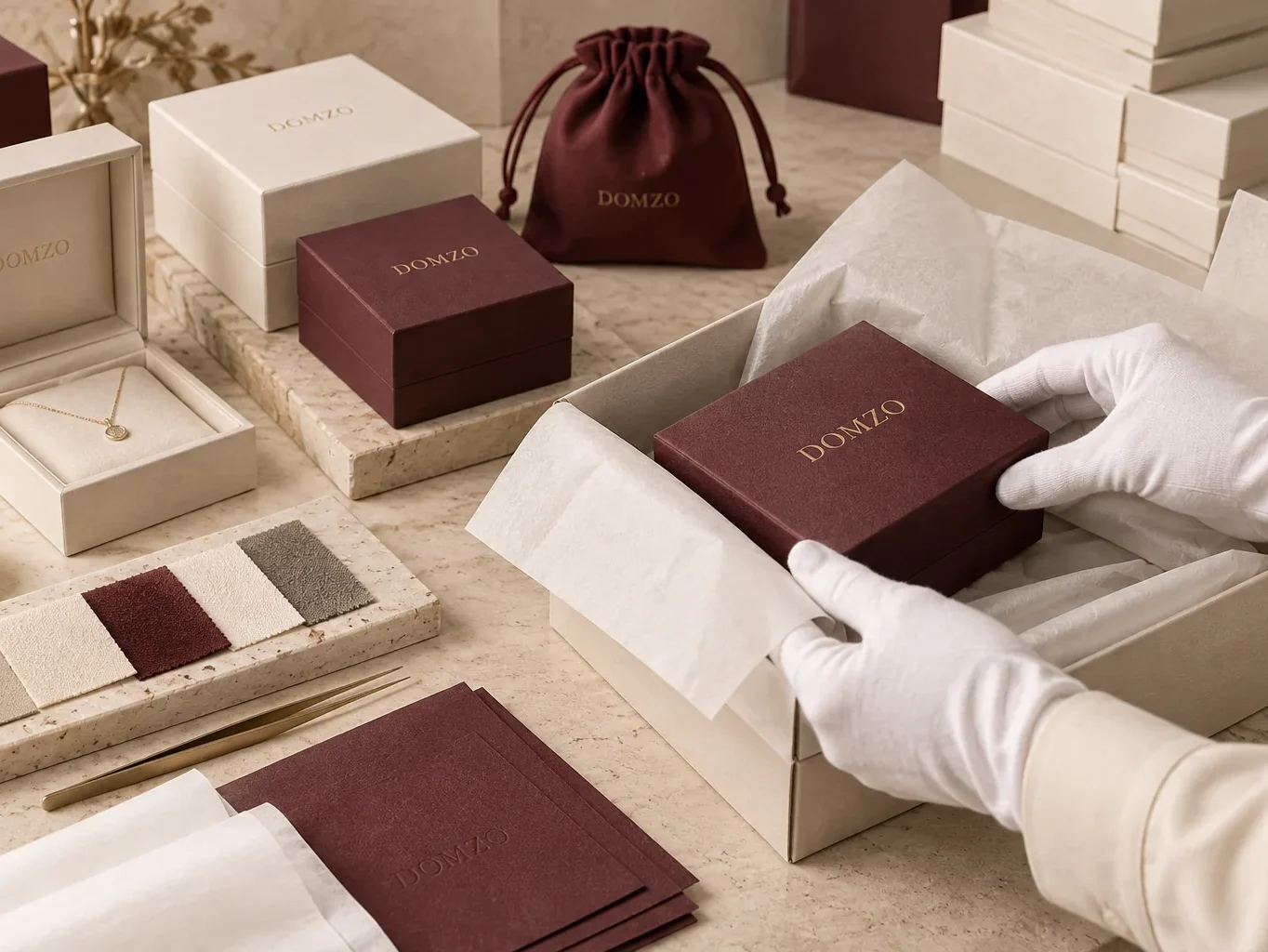
Inspection standards and protective packing should be included when comparing complete project costs.
How to Compare Two Packaging Quotations Correctly
Before comparing prices, place the specifications side by side.
| Item to compare | What should be confirmed |
|---|---|
| Structure | Box type, opening method, board construction and closure |
| Dimensions | Finished exterior size and usable interior size |
| Exterior material | Material name, color, texture and thickness or grade where relevant |
| Insert | Base material, covering, cavity layout and jewelry fit |
| Branding | Logo process, size, color, position and number of applications |
| Quantity | Quantity for every style, size, color and logo version |
| Sampling and tooling | What is included and whether revision costs are separate |
| Packing | Individual protection, units per carton and carton requirements |
| Delivery | Shipping term, destination, method and estimated transit arrangement |
If one quotation does not state these details, ask for clarification before treating it as the lower-cost option. Two numbers are comparable only when they describe the same product and service scope.
How to Reduce Cost Without Making the Packaging Look Cheap
Use fewer packaging sizes
Review whether related jewelry products can share a box size with a carefully designed insert. Reducing unnecessary size variations can simplify tooling, inventory and purchasing.
Coordinate materials across the collection
Using the same covering material, lining color and logo finish across boxes, pouches and bags can create a stronger brand system and simplify material management.
Prioritize one strong finish
A well-sized foil logo or clean embossing can look more premium than several competing decorative processes. Decide which detail is most important instead of adding every available finish.
Choose practical materials
Ask for alternatives that achieve a similar appearance using materials that are easier to source and produce. The goal is not always to select the cheapest material, but to avoid paying for complexity that customers will not notice or value.
Confirm specifications before sampling
Prepare jewelry dimensions, artwork, colors, quantities and reference images before development begins. Clear information reduces avoidable revisions and helps the first sample answer the right questions.
Compare total delivered cost
Include tooling, samples, packing, freight and import arrangements in the decision. A small difference in unit price may be outweighed by inefficient carton volume, damage risk or missing services.
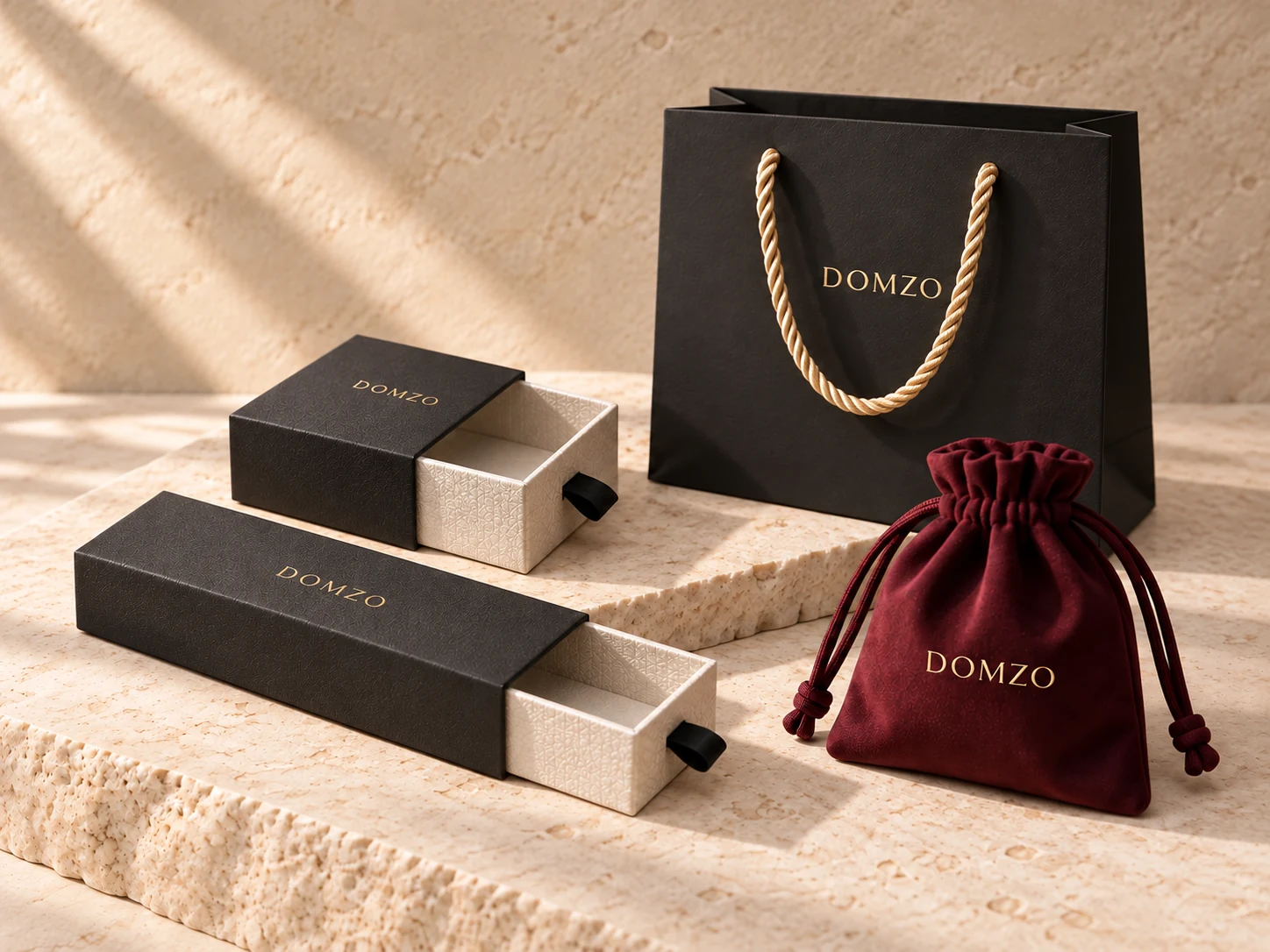
Coordinating materials and finishes across a packaging collection can strengthen consistency and simplify development.
What to Send for an Accurate Packaging Quotation
Send as much of the following information as possible:
- Packaging type and preferred structure
- Jewelry type and product dimensions
- Required finished packaging size, if already known
- Quantity for each style and size
- Number of colors or logo versions
- Logo artwork in vector format
- Preferred exterior and interior materials
- Insert layout or product photos
- Reference images or an existing sample
- Individual packing requirements
- Delivery country and target date
If some details are not yet decided, identify which requirements are fixed and where you are open to recommendations. A supplier can then propose alternatives rather than making assumptions that may not match your priorities.
Sampling and Production Timing
DOMZO’s typical sample time is 7–10 days after the main specification is confirmed. Typical production lead times are:
- Jewelry boxes: 25–30 days
- Fabric pouches: 15–20 days
- Paper bags: 15–20 days
- Jewelry displays: 25–30 days
- Packaging accessories: 20–25 days
These are typical production periods rather than guaranteed delivery dates. Material availability, quantity, complexity, revisions and seasonal capacity can affect timing. Shipping time is arranged separately according to the destination and selected method.
Frequently Asked Questions
How much does custom jewelry packaging cost?
There is no single reliable price because the cost depends on structure, size, material, insert, logo finish, quantity, packing and delivery requirements. A complete specification is needed before a meaningful quotation can be prepared.
Which factor has the biggest effect on jewelry box cost?
Structure and quantity often have a major influence, but the most important factor changes by project. A complex insert, uncommon material or multiple finishing processes can also change the quotation substantially.
Does ordering more reduce the unit price?
Generally, yes. Setup and tooling costs are distributed across more units, and material purchasing may become more efficient. Each size, color and logo version should still be listed separately.
Can I reduce cost by using one box for several jewelry products?
Sometimes. A flexible insert may allow related products to share one outer box, reducing the number of sizes. The solution must still hold the jewelry securely and present it correctly.
Is the sample price included in the production price?
This depends on the project and quotation. Confirm sample, tooling, courier and revision charges separately so the total development cost is clear.
What information is needed before requesting a quote?
Provide the packaging type, size or jewelry dimensions, quantity by version, logo, preferred material, insert requirements, reference images, delivery country and target date.
Request a Specification-Based Quote
The most useful quotation is not simply the lowest number. It is the one that clearly matches the structure, materials, branding, quantity, quality and delivery requirements your brand actually needs.
Send DOMZO your product type, dimensions, quantity, logo and delivery country. We will review the specification and recommend an appropriate packaging solution and production starting point.