
PACKAGING GUIDE
How to Choose Custom Jewelry Packaging Materials
Compare paper, velvet, microfiber, leatherette, fabric and insert options before approving your custom jewelry packaging.
DOMZO PACKAGING GUIDE · 12 MIN READ
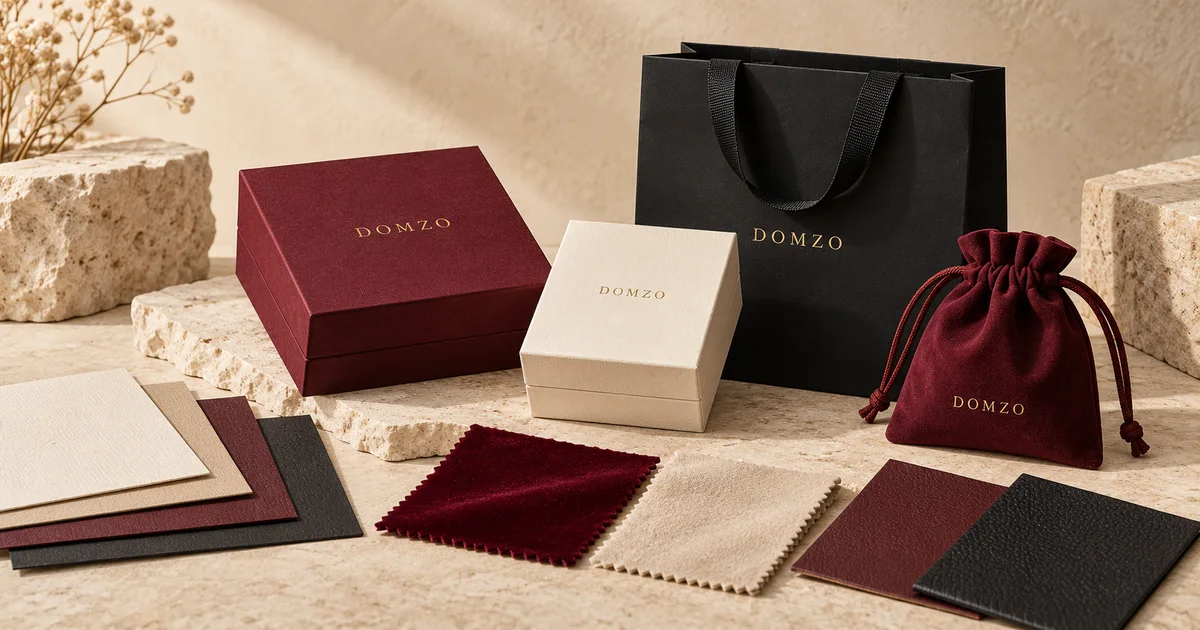
The material is one of the first things a customer notices about jewelry packaging, but appearance is only part of the decision. The right material must also support the jewelry, work with the chosen structure, accept the required logo finish and remain practical for production, packing and delivery.
This guide compares common materials used for custom jewelry boxes, pouches, paper bags and inserts. It also explains how to evaluate texture, durability, color, branding and cost before approving a sample.
Start With the Packaging Function
Do not choose a material from a photograph alone. Begin with what the packaging must do.
Ask these questions first:
- What type of jewelry will the packaging hold?
- Is the packaging for retail display, e-commerce delivery, gifting or long-term storage?
- How much protection does the product need?
- Should the package feel soft, structured, lightweight or substantial?
- Which logo process and brand colors are required?
- Will several packaging items need to look like one coordinated collection?
- What quantity, budget and target delivery date apply?
A ring box for a luxury retail counter has different requirements from a flat pouch included in an online order. Defining the function first prevents the brand from paying for a material that looks attractive but does not suit the product or production method.
Structure Material and Surface Material Are Different
A rigid jewelry box is not made from one material. It normally combines a structural base, an exterior covering, an interior lining and an insert.
The structural base gives the box its shape and strength. The covering creates most of the visible color and texture. The lining affects the interior appearance and the surface that touches the jewelry. The insert holds the product in position.
When requesting a quotation, describe each layer separately. Saying only “velvet jewelry box” can be unclear: velvet may cover the exterior, line the interior, cover the insert or appear in all three areas.
Common Exterior Materials for Jewelry Boxes
Specialty and textured paper
Paper is one of the most flexible covering options for custom jewelry boxes. It is available in smooth, textured, matte, coated, pearlescent and other decorative surfaces.
Advantages include:
- Wide color and texture selection
- Good compatibility with foil stamping, printing, embossing and debossing
- Easy coordination with paper bags, cards and sleeves
- A clean appearance that can work for both minimal and premium brands
The exact result depends on the paper grade, texture and color consistency. Deep textures can change the sharpness of very fine logos, while dark or absorbent papers may influence printed colors. Test the actual logo on the selected paper rather than approving from a screen mockup only.
Velvet
Velvet creates a soft, rich surface and is often used when the brand wants a traditional luxury or gift-focused presentation. Its pile changes appearance under different lighting and viewing directions, which gives the material depth.
Velvet also requires practical consideration. Dust, pressure marks and color variation may be more visible on some finishes. Logo size and foil pressure should be tested because the pile can affect edge definition.
Microfiber and suede-like materials
Microfiber and suede-like coverings provide a soft, refined touch with a generally more controlled surface than high-pile velvet. They are frequently used on jewelry boxes, inserts, pouches and display components.
These materials can help a collection feel consistent because the same or related surface may be used across several packaging formats. Confirm color matching between production batches and test whether the chosen finish shows handling marks.
Leatherette
Leatherette can create a structured, durable and polished appearance. Options range from fine-grain surfaces to more pronounced textures.
It is often selected for premium boxes, watch packaging, travel cases and display pieces. Thickness, grain and flexibility affect wrapping, corners and logo application. A material that works on a large flat panel may behave differently around a small box with tight corners.
Fabric
Woven fabrics can add natural texture and a distinctive tactile quality. Fabric choice should be evaluated for weave consistency, fraying, adhesive compatibility, color control and logo method.
Fine artwork may not reproduce clearly on an open weave. Sampling is especially important when the brand requires precise alignment or a very small logo.
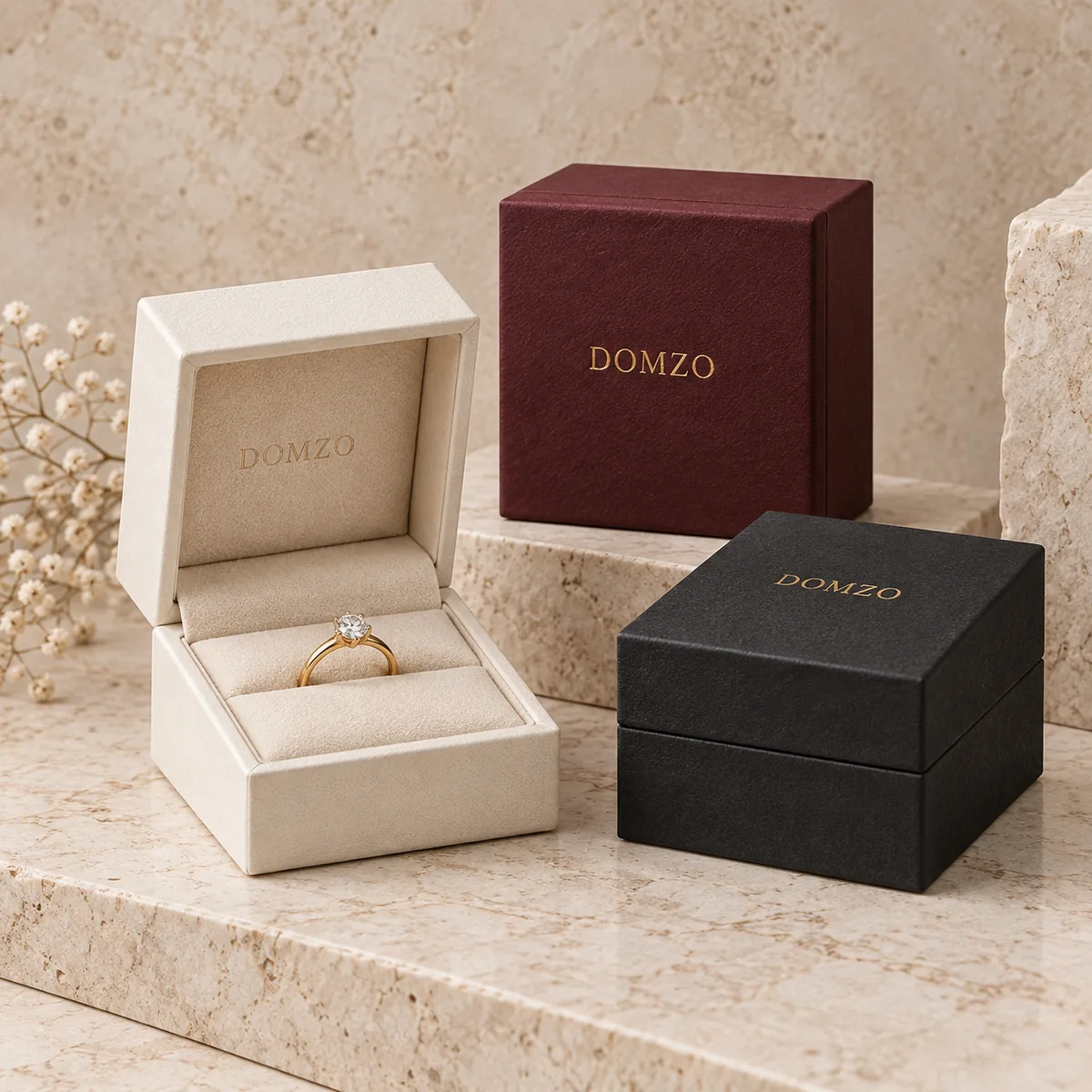
The structure, exterior covering, lining and insert should be specified as separate parts of the box.
How the Main Materials Compare
| Material | Typical visual character | Practical points to confirm | Often suitable for |
|---|---|---|---|
| Specialty paper | Clean, versatile, minimal or decorative | Texture, color, print and foil performance | Rigid boxes, folding boxes, sleeves and coordinated paper items |
| Velvet | Soft, rich and traditional | Pile direction, dust, pressure marks and logo clarity | Premium jewelry boxes, inserts, pouches and displays |
| Microfiber | Soft, refined and controlled | Color consistency, handling marks and finish | Boxes, inserts, pouches and display surfaces |
| Leatherette | Structured, polished and durable-looking | Grain, thickness, corners and logo process | Premium boxes, watch packaging, cases and displays |
| Woven fabric | Tactile, natural and distinctive | Weave, fraying, adhesive and artwork detail | Covered boxes, pouches and special collections |
This table is a starting point rather than a quality ranking. A well-executed paper box can look more premium than a poorly specified leatherette box. Material, structure, proportions, color and finishing need to work together.
Choosing Materials for Jewelry Inserts
The insert controls product position and presentation. It should hold the jewelry securely without making it difficult to remove.
Common insert constructions may use foam, paperboard or other formed bases covered with paper, velvet, microfiber or fabric. The correct option depends on product weight, shape, number of pieces and presentation angle.
Confirm:
- Jewelry dimensions and product height
- Ring slot, earring hole, pendant tab or chain arrangement
- Number and position of cavities
- Surface material touching the jewelry
- Ease of product placement and removal
- Stability during transport
- Color contrast between the jewelry and the insert
A pale insert can highlight dark or colored jewelry, while black or burgundy can create a stronger dramatic contrast with gold. Color should support visibility as well as brand identity.
If one insert is intended for several products, test every product rather than assuming the same cavity will hold them all correctly.
Choosing Materials for Jewelry Pouches
Pouches are lightweight and useful for protection, gifting, travel or as a secondary layer inside a box. Common choices include velvet, microfiber, suede-like fabric, cotton and other woven materials.
Consider:
- Whether the pouch will touch polished jewelry directly
- Fabric thickness and softness
- Drawstring, ribbon, snap or fold closure
- Stitching quality and seam allowance
- Logo method and available print area
- Lint, colorfastness and handling marks
- Finished size after the closure is tightened
Velvet gives a plush appearance, while microfiber can create a cleaner, smoother look. Cotton or woven fabrics can suit brands seeking a more natural visual direction, but the exact material composition and any environmental claims should be verified rather than assumed.
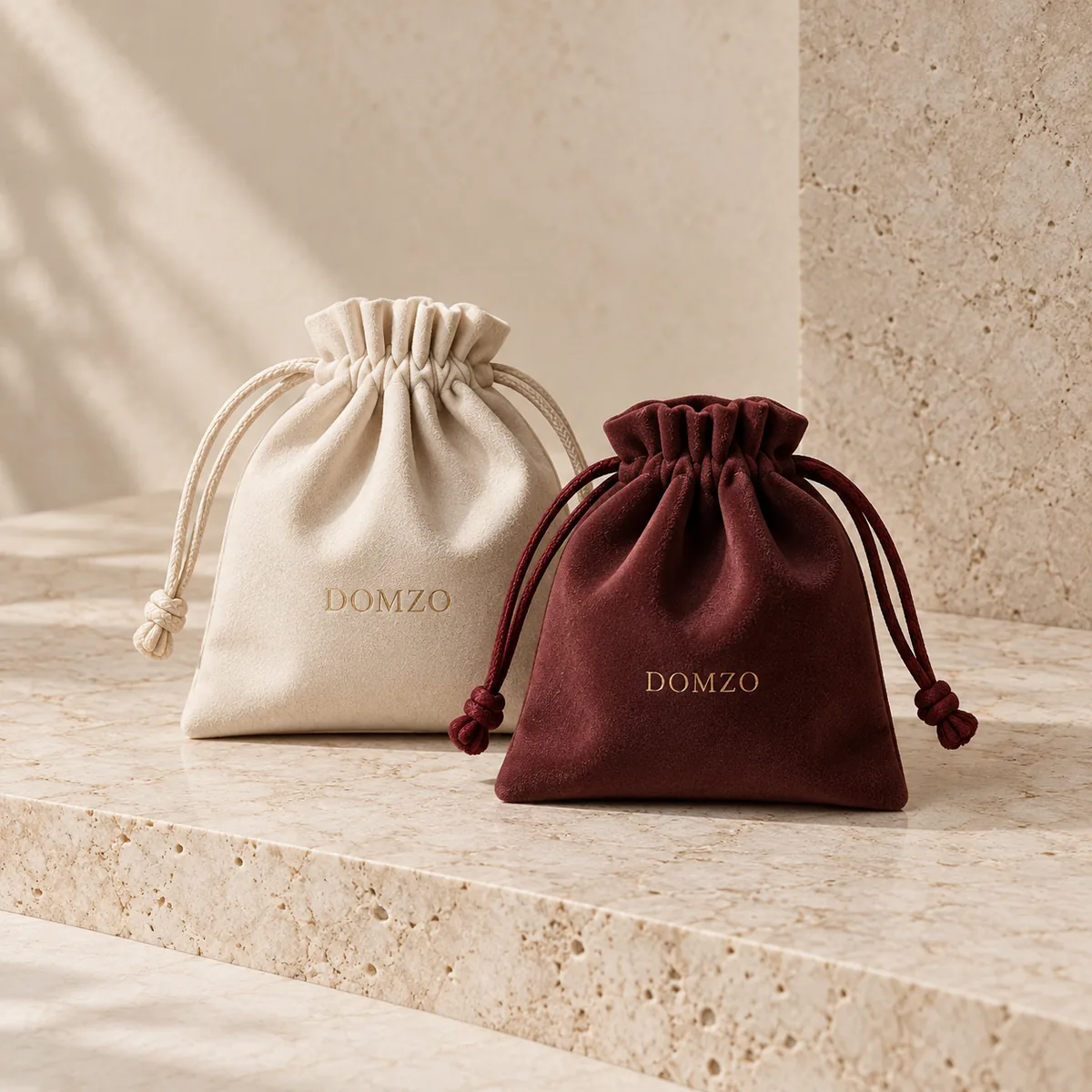
Pouch material, closure, stitching and finished usable size should be reviewed together.
Choosing Paper for Branded Jewelry Bags
Paper bags connect the retail purchase with the rest of the packaging collection. The paper should support the bag size, weight of the contents, handle construction and logo finish.
Important decisions include:
- Paper color, texture and thickness
- Coated or uncoated appearance
- Bag dimensions and base width
- Handle material, color and attachment
- Reinforcement at the opening and base where required
- Printing or foil method
- Protective packing during shipment
A paper bag does not need to match the jewelry box material exactly. It should share enough visual cues—such as color, logo finish or handle color—to feel intentional.
Dark paper with gold foil can create a strong premium contrast. Light textured paper can feel softer and more understated. Always review a physical sample because paper texture and lighting can change how the final color appears.
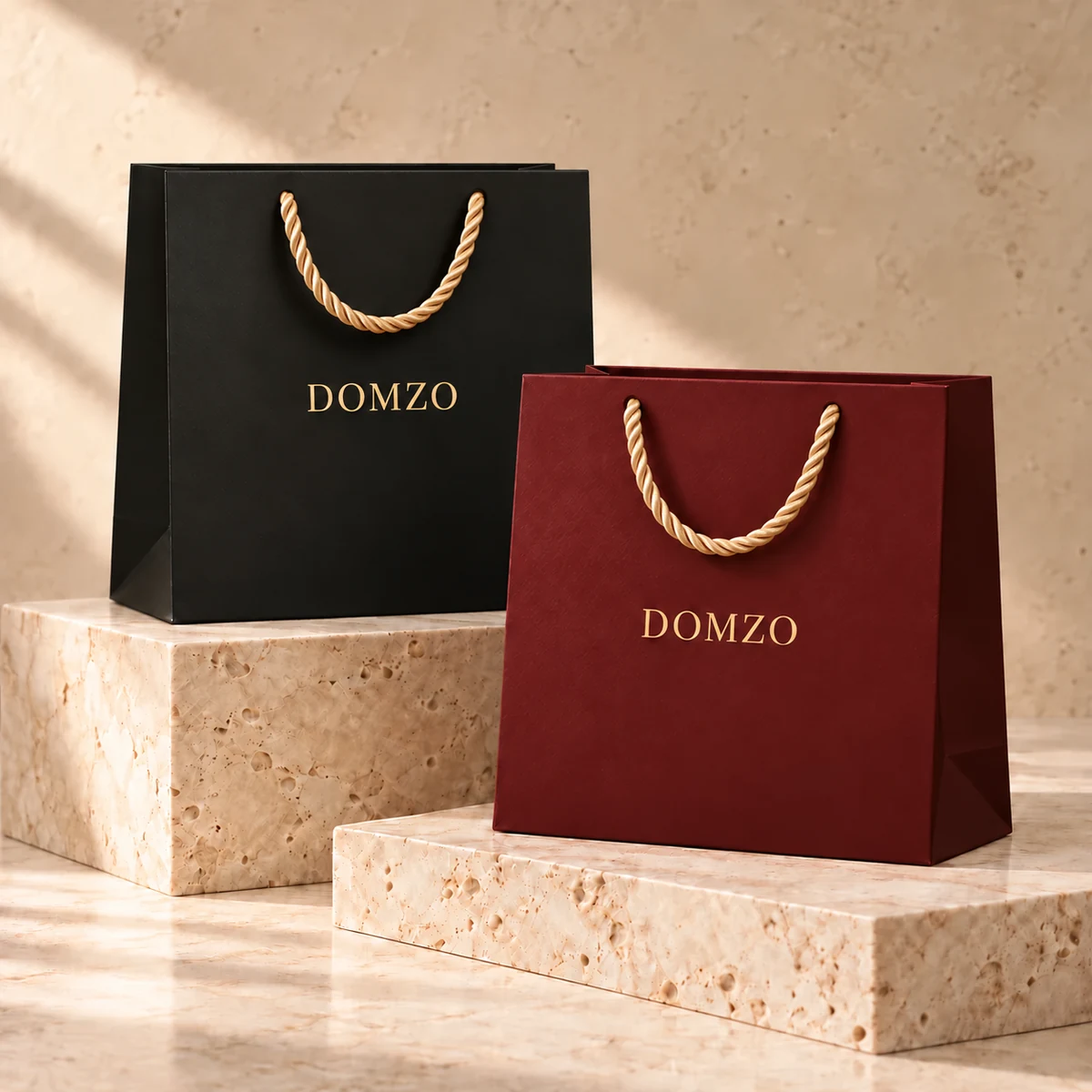
Paper, handle construction and logo process should be tested as one complete bag specification.
Match the Logo Finish to the Material
The same logo process does not produce the same result on every surface.
Hot foil stamping
Foil can create a crisp metallic or colored mark on many papers and selected fabrics or leatherette surfaces. Texture, heat, pressure and artwork detail influence the result.
Printing
Printing may suit detailed artwork or non-metallic colors, but the base material color and absorbency can affect appearance. A printed proof on white paper is not enough to predict the result on dark textured stock.
Embossing and debossing
These processes create a raised or recessed impression. They can give subtle branding without adding another color, but material thickness and structure determine how clearly the detail appears.
Labels, patches and woven marks
For some pouches and fabrics, a sewn label, patch or woven mark may be more suitable than direct printing. Confirm how the added component affects comfort, seams and the usable interior.
Provide vector artwork and identify the required logo size, color, position and number of applications. Very fine lines or small text may need adjustment for the chosen material and process.
Build a Coordinated Packaging Collection
A brand does not need to use one material everywhere. Coordination can come from a shared color palette, repeated logo finish, consistent proportions or related textures.
For example:
- A textured paper box can pair with a microfiber pouch in the same color family.
- A burgundy rigid box and cream paper bag can share the same gold foil.
- Black display pieces can support cream and burgundy retail packaging without copying either material.
- One insert color can be repeated across several box sizes to unify the collection.
Limiting unnecessary variations can also simplify purchasing and production. The custom jewelry packaging cost guide explains how material availability, versions, finishing and quantity affect a quotation.

A coordinated collection can combine different materials while repeating color and logo details.
Evaluate Sustainability Claims Carefully
Words such as recyclable, recycled, biodegradable and sustainable are not interchangeable. The complete package may combine board, covering paper, foam, fabric, magnets, adhesive and foil, each with different end-of-life considerations.
If environmental requirements are important, define them precisely. Ask for relevant material composition, recycled-content information, certification or supplier documentation where available. Also consider whether the package can be reduced in size, simplified, reused or separated into components.
Avoid publishing an environmental claim based only on a natural-looking color or texture. Marketing language should be supported by the actual material specification and applicable evidence.
Approve Physical Samples Before Production
Digital mockups are useful for layout, but they cannot fully show texture, softness, color under different lighting, foil reflection or the way a box opens.
Review a physical sample for:
- Exterior and interior color
- Texture and surface consistency
- Box opening, closure and corner quality
- Insert fit and jewelry position
- Logo size, placement and edge clarity
- Pouch stitching and closure function
- Bag strength, handle position and base construction
- Protective packing for production delivery
DOMZO’s typical custom sample time is 7–10 days after the main specification is confirmed. Record approved material codes, colors and reference samples so that bulk production can be checked against the same standard.
Material Choice, MOQ and Cost
Unusual colors, custom-dyed fabrics, special textures and multiple material versions may affect minimum quantities and unit cost. Standard available materials are often more efficient for smaller projects.
Before confirming a material, ask whether it is regularly available, whether a minimum purchase applies and whether the quantity is calculated separately for each color or size.
For DOMZO’s standard and possible lower starting quantities, see the custom jewelry packaging MOQ guide. Lower quantities may be possible for selected projects, usually with a higher unit price.
A Practical Material Selection Checklist
Before requesting a sample, send:
- Packaging type and preferred structure
- Jewelry type, dimensions and weight where relevant
- Exterior and interior material preferences
- Reference colors or Pantone information
- Logo artwork and preferred finish
- Insert layout or product photographs
- Quantity for each size, color and logo version
- Required bag, pouch, card or accessory items
- Delivery country and target date
- Any documented environmental requirements
If the material is not fixed, explain the visual result and practical requirements you want. A supplier can then recommend available options for sampling.
Frequently Asked Questions
What is the best material for a luxury jewelry box?
There is no single best material. Premium results can be achieved with specialty paper, velvet, microfiber, leatherette or fabric when the structure, color, insert and logo finish are well coordinated. The correct choice depends on the product, brand positioning, handling and budget.
Is velvet better than microfiber for jewelry packaging?
Velvet usually gives a deeper, plush appearance, while microfiber often provides a smoother and more controlled surface. Compare physical samples for softness, color, handling marks, logo clarity and suitability for the intended product.
Can one material be used across boxes, pouches and displays?
Sometimes, but it is not always necessary or practical. A coordinated collection can use related materials with the same color family and logo finish. Confirm color matching because different material types reflect light differently.
Which material works best with gold foil?
Many papers, leatherette surfaces and selected fabrics can accept gold foil, but texture and production settings influence sharpness and adhesion. Approve an actual foil sample on the selected material.
Are paper jewelry boxes recyclable?
It depends on the complete construction and local recycling system. Coverings, laminations, foam inserts, magnets, adhesives and other components can affect recyclability. Verify the full specification before making a claim.
What should I send to receive material recommendations?
Send the jewelry type and dimensions, packaging format, quantity, logo, preferred colors, reference images, delivery country and target date. State which requirements are fixed and where alternatives are acceptable.
Choose Materials for the Complete Project
The strongest packaging material is not simply the most expensive or most decorative option. It is the material that supports the jewelry, fits the structure, presents the brand consistently and can be produced reliably at the required quantity.
Send DOMZO your product type, dimensions, quantity, logo, preferred visual direction and delivery country. We will review the project and recommend suitable materials and a practical sampling direction.

